
Appearance
Multi-terminal Application Development
In the mobile internet era, users are no longer concentrated in a single entry point, but scattered across multiple touchpoints.
If enterprises rely only on a single channel, their growth space will be severely limited.
Magicsoft helps enterprises build omni-channel reach capabilities, enabling seamless user connection and unified operations.
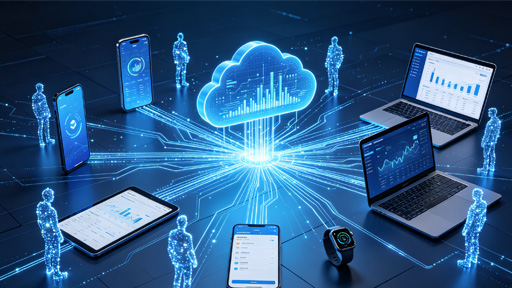
I. From "Single Channel" to "Full User Ecosystem"
In the mobile internet era, users are no longer concentrated in a single entry point, but scattered across multiple terminals. Some people are used to WeChat Mini Programs, some only install Apps, some access through PC web pages, and others enter through H5 activity pages. If enterprises rely only on a single channel, user reach and conversion efficiency will be severely limited.
We use a simple diagram to express the necessity of a multi-terminal strategy:
PC + App + Mini Program + H5 → Full Terminal Coverage → Business Follows Users| Terminal | User Behavior Characteristics | Typical Scenarios | Consequences of Not Implementing |
|---|---|---|---|
| PC Web | In-depth browsing, complex operations, office environment | Backend management, platform official website, B2B transactions | Lose desktop users |
| App | High stickiness, high frequency, personalized | Member center, push notifications, immersive experience | Cannot build user loyalty |
| Mini Program | Lightweight, fission, social dissemination | Group buying, flash sales, scan-to-buy, nearby stores | Miss traffic dividends in WeChat ecosystem |
| H5 | Flexible, cross-platform, rapid iteration | Event marketing, referral rewards, questionnaire collection | Marketing campaigns cannot go online quickly |
Magicsoft helps enterprises build omni-channel reach capabilities, enabling seamless connection and unified operations for users across different terminals. Instead of developing separate systems for each terminal, we implement "One Development, Multi-terminal Reuse" based on a unified backend and data middle platform
II. Overall Architecture of Multi-terminal Collaboration
Our multi-terminal solution adopts a unified middle platform architecture to ensure consistent experience across terminals, data interoperability, and efficient development.
Architecture Diagram:
           ┌─────────┐  ┌─────────┐  ┌─────────┐  ┌─────────┐
           │  PC Web │  │   App   │  │ MiniProg│  │   H5    │
           └────┬────┘  └────┬────┘  └────┬────┘  └────┬────┘
            └─────────────────┼───────────────────────────┘
                              ↓
                     ┌──────────────────────┐
                     │  Unified API Gateway │
                     └────────┬─────────────┘
                              ↓
           ┌──────────────────────────────────────────────────────────┐
           │          Magic COP Middle Platform                       │
           │  (User Center / Order Center / Product Center / Payment) │
└──────────────────────────────────────────────────────────┘- ✔ Unified Backend: Business logic, data storage, and management backend are completely unified for all terminals
- ✔ Multi-terminal SDK: Provides standard SDKs for each terminal for quick integration
- ✔ Real-time Data Synchronization: User operations on any terminal are immediately visible on other terminals
III. Detailed Capabilities of Each Terminal
PC Web: Powerful Management and Display Capabilities
PC terminals are suitable for complex backend management and in-depth browsing scenarios.
| Capability | Detailed Description |
|---|---|
| Management Backend | Product management, order processing, user management, data reports, permission configuration |
| Platform Official Website | Enterprise showcase, product introduction, news updates, online customer service |
| B2B Trading Terminal | Bulk procurement, inquiry and quotation, contract signing, statement download |
| Responsive Design | Adapts to different screen sizes (PC, tablet, laptop) |
App (iOS/Android): Private Domain for High-stickiness Users
Apps are the most direct connection channel between enterprises and users, suitable for high-frequency usage scenarios.
| Capability | Detailed Description |
|---|---|
| Native Experience | Smooth page transitions, hardware access (camera, location, fingerprint) |
| Personalized Recommendations | Recommends products or content based on user behavior |
| Push Notifications | Order status, activity reminders, personalized notifications to increase return visit rate |
| Offline Capability | Partial content can be cached offline for browsing without network |
| Social Sharing | One-click sharing to WeChat, Moments, Weibo, etc. |
App users typically have higher loyalty and lifetime value
Mini Program (WeChat/Alipay): Lightweight Customer Acquisition and Fission Tool
Mini programs feature "use and go, come back when needed", making them the best carrier for user acquisition and fission.
| Capability | Detailed Description |
|---|---|
| Quick Launch | No download or installation required, can be used by scanning QR code or searching |
| Social Fission | Naturally suitable for group buying, share to get red envelopes, referral rewards, etc. |
| WeChat Ecosystem Integration | WeChat Pay, official account association, template messages, customer service messages |
| Nearby Mini Programs | Offline stores can get nearby traffic through "Nearby Mini Programs" |
| Lightweight Transactions | Suitable for products with low unit price and short decision-making path |
We once helped a fresh food e-commerce customer acquire 100,000+ new users in 2 weeks through mini program + group buying
H5 (Mobile Web): First Choice for Marketing Campaigns and Rapid Iteration
The biggest advantages of H5 are cross-platform compatibility and quick launch, making it suitable for activity pages, landing pages, questionnaires, etc.
| Capability | Detailed Description |
|---|---|
| Cross-platform | Accessible on iOS, Android, WeChat built-in browser, and embedded in other Apps |
| Rapid Iteration | No need for version release after modification, takes effect immediately upon refresh |
| Campaign Marketing | Flash sale pages, red envelope pages, referral pages, voting pages, with launch cycle measured in days |
| Low Cost | Development cost is much lower than Apps, suitable for scenarios with limited budget |
| Data Tracking | Can collect user behavior through buried points to optimize campaign effects |
Example of Multi-terminal Combination Strategy:
- Use Mini Program for fission user acquisition
- Use App for long-term operation of high-value users
- Use H5 for short-term marketing campaigns
- Use PC for backend management and B2B transactions
Four-terminal collaboration forms a complete closed loop of "Acquisition → Retention → Conversion → Management"
IV. Core Technical Advantages of Multi-terminal Development
| Advantage | Detailed Description |
|---|---|
| Unified Architecture | Based on Magic COP framework, one backend supports all frontends, reducing development and maintenance costs by over 50% |
| Data Interoperability | User, order, and product data are fully synchronized across terminals, providing seamless experience when switching terminals |
| One Development, Multi-terminal Reuse | Core business logic only needs to be developed once, and can be quickly extended to new terminals through APIs |
| Flexible Expansion | Can quickly support new channels such as Douyin Mini Programs, Quick Apps, in-vehicle terminals, VR/AR, etc. in the future |
| Performance Optimization | Specialized optimization for each terminal's characteristics (App package size, Mini Program first-screen loading, H5 SEO) |
We follow the architectural principle of "Unified Backend, Separate Frontends" to ensure that enterprises do not need to reconstruct the backend when adding new terminals in the future
Summary: Differentiated Value of Magicsoft Multi-terminal Application Development
- ✔ Full Terminal Coverage: PC, App, Mini Program, H5, no missing channels
- ✔ Data Unification: User, order, and product data synchronized across terminals, providing seamless experience
- ✔ Efficient Development: Unified middle platform + multi-terminal SDK, reducing development costs by 50%
- ✔ Growth-driven: Mini Program for user acquisition + App for user retention + H5 for fission, forming a traffic closed loop
Evolution path we help enterprises achieve:
Single Channel → Multi-channel → Omni-channel → User Ecosystem
When enterprises have full terminal reach capabilities, they no longer passively wait for users, but actively build a three-dimensional operation system where "business follows users wherever they are"