
Appearance
Aggregation Payment Platform
Aggregation Payment: Unified Access and Management Platform for Multiple Payment Methods
The core value of the Aggregation Payment System can be summarized in one sentence: "We handle the complexity, you enjoy simplicity." In today's business landscape, users expect diverse payment options—WeChat Pay, Alipay, UnionPay Cloud QuickPass, bank cards, and even digital RMB. For enterprises, integrating each payment method individually would not only incur high development costs and long implementation cycles but also create a maintenance nightmare.
The Aggregation Payment System was developed to solve this exact pain point. It unifies various payment methods including WeChat Pay, Alipay, bank cards, and UnionPay Cloud QuickPass into a single platform, providing a standardized payment interface externally while intelligently routing transactions through different channels internally. With just one integration, enterprises can support all mainstream payment methods.
From a product perspective, the Aggregation Payment System is a lightweight, highly integrated, and standardized payment middleware. It does not handle fund settlement (which remains the responsibility of underlying third-party payment providers or banks) but focuses on abstracting away the differences between various payment channels. Enterprises only need to call a single set of APIs from the aggregation system to complete all payment operations, including initiating payments, querying statuses, processing refunds, and reconciling accounts.
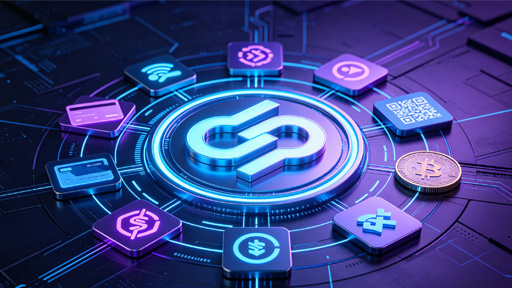
This is like a "universal socket"—whether you plug in a two-prong or three-prong plug, it will work seamlessly with our aggregation system
I. Core Business Process: From User Selection to Payment Completion
The following flowchart illustrates how the Aggregation Payment System processes a user's payment request from "selecting a payment method" to "completing payment and returning results." The entire process is transparent to users, who only experience "scanning a QR code" or "clicking to pay," while multiple systems work together behind the scenes.
User places an order and enters the checkout page
       ↓
User selects a payment method (WeChat Pay / Alipay / UnionPay Cloud QuickPass / Bank Card / Digital RMB)
       ↓
Frontend calls the unified API of the Aggregation Payment System, passing parameters such as order amount, payment method, and callback URL
       ↓
Aggregation Payment System automatically matches the corresponding underlying payment channel based on the selected payment method (e.g., official WeChat Pay channel)
       ↓
System generates the required payment parameters for the channel (such as WeChat's prepay_id) and returns them to the frontend
       ↓
Frontend launches the corresponding wallet or banking app, and the user completes password/fingerprint verification
       ↓
Underlying payment channel returns payment results (synchronous + asynchronous)
       ↓
Aggregation Payment System receives the asynchronous notification and updates the local order status to "Paid"
       ↓
System notifies the merchant system of "payment success" through the callback URL
       ↓
User sees the "Payment Completed" page, and the merchant begins processing the order (e.g., shipping)
Throughout this process, the merchant system only needs to integrate with the Aggregation Payment System once. There's no need to worry about WeChat's signature rules, Alipay's encryption methods, or UnionPay's message formats—all these differences are handled by our aggregation system.
II. System Capability Structure: Three-Tier Architecture with Clear Responsibilities
While the Aggregation Payment System offers comprehensive functionality, it is internally structured into three distinct layers, each addressing specific types of challenges.
| Layer | Modules | Core Functions | Product Design Highlights |
|---|---|---|---|
| Access Layer | Unified API | Provides RESTful APIs supporting payment initiation, status query, refund processing, order cancellation, etc. | API design follows RESTful standards with consistent request/response formats supporting JSON/XML, reducing integration time from 3 days to half a day |
| SDKs and Documentation | Offers multi-language SDKs for Java, PHP, Python, Node.js, Go, along with detailed integration documentation and sample code | SDKs encapsulate complex logic for signing, encryption/decryption, and retries. Developers can complete payment integration with fewer than 5 lines of code | |
| Core Processing Layer | Payment Integration Engine | Dynamically calls APIs of corresponding underlying channels based on the user's selected payment method | Supports hot-swapping: adding a new payment channel only requires configuration changes, no core code modifications needed. Currently includes over 20 commonly used channels |
| Order Management | Records the complete status of each payment order (Pending, Processing, Success, Failed, Refunded, Closed) | Strictly designed order state machine prevents status inconsistencies. Supports configurable automatic order closure after timeout | |
| Channel Management | Configures merchant IDs, keys, fees, activation status, and priority for each channel | Supports round-robin use of multiple merchant IDs under the same channel to distribute transaction volume or serve as backups | |
| Retry and Compensation Mechanism | Automatically retries when asynchronous notifications are lost or network exceptions occur; provides active query interfaces for merchant compensation | Implements exponential backoff retry strategy (1s, 2s, 4s, 8s...) with a maximum of 10 retries to ensure notifications are eventually delivered | |
| Support Layer | Reconciliation System | Automatically downloads daily statements from underlying channels, matches them with local orders, and generates discrepancy reports | Supports T+1 automatic reconciliation. Discrepant orders can be exported with one click. Reconciliation files support multiple formats including CSV, XLSX, and TXT |
| Data Analysis | Statistics on payment success rates, payment method distribution, and user payment behavior patterns by time period | Built-in visual dashboard helps operators understand user payment preferences and optimize checkout page layout | |
| Security and Risk Control | Transport encryption (TLS 1.2+), sensitive information desensitization, payment amount verification, and duplicate payment prevention | Verifies callback signatures to prevent forgery. Supports setting daily payment limits per user for both transaction count and amount |
III. In-Depth Value: Aggregation Payment is Not Just About "Saving Money"—It's About "Increasing Efficiency"
Many enterprises believe the greatest value of aggregation payment is "reducing development costs by avoiding separate integrations with multiple channels." While this is true, the Aggregation Payment System offers far more profound benefits.
1. Reduce Development and Maintenance Costs
If an enterprise integrates with WeChat Pay, Alipay, and UnionPay separately, each integration typically takes 3-5 working days (including documentation review, coding, and testing). Additionally, each channel's updates (such as API version changes) require ongoing maintenance. With the Aggregation Payment System:
- Complete integration once, and all future channel updates are handled by our team
- Enterprises enjoy near-zero maintenance costs
- For startups or fast-paced teams, the saved development time can be invested in core business operations
2. Improve Payment Conversion Rates
Payment failures can occur due to various reasons: temporary channel outages, bank card limits, network timeouts, etc. The Aggregation Payment System can recover from these failures through "channel fallback" or "automatic retries":
- If a user selects WeChat Pay but the WeChat channel is temporarily unavailable
- The system can automatically switch to Alipay (if permitted by the user) or prompt the user to retry
- This intelligent handling can increase payment success rates by 2-5 percentage points, directly boosting enterprise revenue
3. Unify Data and User Experience
The Aggregation Payment System consolidates transaction data from all payment methods:
- Enterprises can view the distribution, success rates, and average transaction values of different payment methods in a single report
- Operators can optimize the checkout page layout based on this data (placing the most frequently used payment methods first)
- Or launch targeted marketing campaigns for specific payment methods (e.g., "5 yuan discount for bank card payments")
- A consistent payment page design also enhances brand consistency and builds user trust
IV. Product Advantages (Key Highlights)
To clearly demonstrate the advantages of the Aggregation Payment System, the following table compares the scenarios of "without aggregation payment" and "with the Aggregation Payment System":
| Comparison Dimension | Without Aggregation Payment (Separate Channel Integrations) | With Aggregation Payment System (Magicsoft Solution) |
|---|---|---|
| Integration Time | 3-5 days per channel, totaling 2-3 weeks for 3 channels | Half a day to 1 day (integrate with unified API) |
| Daily Maintenance Cost | Independent maintenance for each channel. API updates require code changes for each integration | Zero maintenance (our team handles all underlying changes) |
| Payment Success Rate | Dependent on individual channel stability, averaging around 97% | Over 99% (intelligent fallback + retry mechanisms) |
| Reconciliation Efficiency | Requires manual login to each channel's backend, downloading statements, and manual matching | Fully automated (system automatically downloads, matches, and generates reports) |
| Data Analysis | Data silos across channels make unified analysis difficult | Unified dashboard provides clear visibility into all metrics |
| Adding New Payment Methods | Requires re-development and integration, taking 1-2 weeks | Configurable without development, takes effect the same day |
| User Experience | Different payment methods redirect to different pages with inconsistent styles | Unified checkout page with consistent branding and familiar user interface |
V. One-Sentence Summary
Aggregation Payment System = Unified Gateway for Payment Experience and Efficiency
Enable enterprises to access all mainstream payment methods with just one integration, reducing development costs by 80% and increasing payment success rates to over 99%