
Appearance
Magic Shop
Magic Shop: The Core System for Private Domain E-commerce and Brand Monetization
Magic Shop is not just a simple "online store tool", but an independent e-commerce operating system built by Magicsoft for brand enterprises and private domain traffic operators. Its product positioning is very clear: to help enterprises completely break free from dependence on third-party large platforms (Tmall, JD.com, Douyin Store, etc.), establish a trading position that fully belongs to themselves, and thus truly own the autonomy of users, data and profits.
From the perspective of underlying product logic, although traditional platform e-commerce can bring initial traffic, the price enterprises pay is high commissions, being bound by platform rules, unable to deeply reach users, and even more difficult to accumulate their own user assets. The emergence of Magic Shop is precisely to break this dilemma. It integrates commodity transactions, order management, member operations, marketing gameplay and data analysis to form a business closed loop with user asset operation as the core.
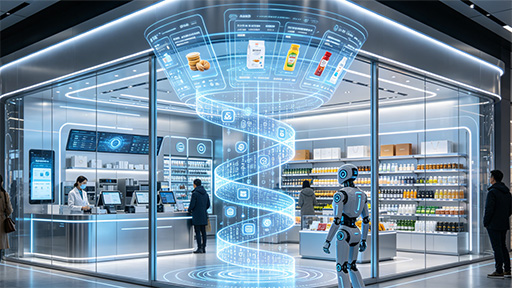
I. Product Positioning: Not Just a "Selling Tool", but a "User Asset Management Platform"
If we compare an enterprise's private domain operation to a field, then Magic Shop is a fully equipped modern farm—it not only provides "sowing" (product listing) and "harvesting" (order payment) functions, but more importantly, it helps you continuously improve the soil (user accumulation), plan crop rotation (operation strategies), and resist pests and diseases (risk control and after-sales).
- For Brand Owners: Build official mall, accumulate members and brand loyalty
- For Social E-commerce: Take private domain traffic (WeChat groups, official accounts, video accounts) as the main conversion position
- For Content Creators/Hosts: Guide fans to own mall, achieve higher profit monetization
- For Traditional Retail Transformation: Online and offline integration, connect stores and online orders
Essential Difference: Platform-dependent selling ❌ → Brand-independent assets ✅
II. Product Architecture Overview: Six Core Engines
Magic Shop adopts a modular architecture, allowing enterprises to enable functional modules on demand according to their development stage:
┌──────────────────────────────────────────────────────────────────┐
│                      Traffic Access Layer                        │
│  Account | Mini | Video | Douyin | Weibo | Offline | Distributor │
├──────────────────────────────────────────────────────────────────┤
│                      Marketing Conversion Layer                  │
│  Group | Flash | Coupon | Reduction | Points | Live | Fission    │
├──────────────────────────────────────────────────────────────────┤
│                      Transaction Core Layer                      │
│  Product | Order | Cart | Payment | Inventory | After-sales      │
├──────────────────────────────────────────────────────────────────┤
│                      User Operation Layer                        │
│  Member | Benefits | Points | Portrait | Track | Notification    │
├──────────────────────────────────────────────────────────────────┤
│                      Data Insight Layer                          │
│  Transaction | User | Product | Marketing | Dashboard | Export   │
├──────────────────────────────────────────────────────────────────┤
│                      Infrastructure Layer                        │
│           COP | Cloud | Security | Concurrency | API             │
└──────────────────────────────────────────────────────────────────┘
III. Core Business Closed Loop: Positive Cycle from Traffic to Assets
The core product logic of Magic Shop can be summarized by a complete business closed loop:
Traffic Introduction → User Accumulation → Transaction Conversion → Repurchase Improvement → Data Accumulation → Precision Marketing → Fission Growth → New Traffic Introduction
     ↑                                                                         ↓
└────────────────────────── Positive Cycle ──────────────────────────────────────┘- Traffic Introduction: Acquire customers through multiple channels such as official accounts, video accounts, distributors, and advertisements
- User Accumulation: Register as a member, the system automatically tags users and enters them into the user pool
- Transaction Conversion: Multiple marketing tools promote first-time orders and reduce decision-making barriers
- Repurchase Improvement: Mechanisms such as member levels, points, and coupons improve repurchase rates
- Data Accumulation: Full-link behavior data collection to form user portraits
- Precision Marketing: Group push based on portraits to improve conversion efficiency
- Fission Growth: Social gameplay such as distribution and group purchase to achieve old customers bringing new ones
IV. Core Function System
| Function Module | Core Capabilities | Product Highlights | Value to Enterprises |
|---|---|---|---|
| Product System | Multi-dimensional product management / SKU specifications / Category brands / Batch listing and delisting | Supports mixed operation of virtual products, physical products, and service products | Flexibly supports product structures from single item to thousands of SKUs |
| Order System | Full-process order processing / Automatic status flow / Order splitting and merging / After-sales management | Supports automatic order warehousing and splitting | Reduces manual intervention by 80%, improves fulfillment efficiency |
| Member System | Level growth / Points mall / Tag grouping / Behavior track / Silent user wake-up | Supports custom level rules (consumption amount, frequency, interaction, etc.) | Increases repurchase rate by 30%+, extends user lifecycle |
| Marketing Tools | Group purchase / Flash sale / Coupon / Full reduction / Limited time purchase / Deposit expansion | 30+ marketing gameplay, activities can be launched with 0 development | Low-cost new customer acquisition, conversion rate increased by 2~5 times |
| Distribution System | Multi-level distribution / Commission settlement / Distributor management / Promotion poster / Performance dashboard | Supports 2nd to 3rd level distribution with automatic settlement | Low-cost construction of 10,000-person distribution team |
| Data System | User portrait / Transaction analysis / Product ranking / Funnel model / RFM analysis / Real-time dashboard | One-click generation of daily/weekly reports, supports export | Supports refined operation, decision-making efficiency increased by 5 times |
| Content System | Article publishing / Video management / Grassroots community / Buyer show / Live streaming mounting | Supports content interoperability between official accounts and mini programs | Improves user stickiness, extends stay duration |
| Open Interface | Standard API / Webhook / Event subscription | Integrates with third-party systems such as ERP, WMS, CRM, TMS | Connects existing enterprise systems, avoids data silos |
V. Comprehensive Comparison with Traditional Platform E-commerce
| Comparison Dimension | Third-party Platforms (Tmall/JD.com/Douyin) | Magic Shop Independent E-commerce System | Differential Advantage |
|---|---|---|---|
| User Ownership | Platform users, enterprises cannot directly reach them | Enterprise private domain users, fully independent | Users are assets |
| Commission Cost | 2%~10% transaction commission + various service fees | No commission, only system service fee | Annual savings of hundreds of thousands to millions |
| Data Ownership | Platform controls core data, export is restricted | Enterprise owns all data | Data is competitiveness |
| Operation Rules | Restricted by platform activities, policies, and penalty rules | Fully independent, flexible and variable | Not "strangled" by platforms |
| Marketing Gameplay | Standardized tools, need to pay for traffic | 30+ gameplay, supports custom development | Unlimited creativity |
| Brand Image | Thousands of stores look the same, low brand recognition | Fully customized UI/UX, independent brand | Strengthen brand awareness |
| Customer Relationship | Cannot actively reach users, rely on platform messages | Direct messages via SMS, official accounts, mini programs | Active operation capability |
| Long-term Value | Traffic rental model, no asset accumulation | Build digital assets, sustainable appreciation | Assets become more valuable with use |
VI. Typical Business Scenarios and Solutions
Scenario 1: Brand Owners Establish Official Mall
- Pain Point: When opening stores on platforms, users are recommended to competitors by the platform, and brands cannot accumulate loyal fans
- Magic Shop Solution: Build brand independent mall, member system + points mall + official account binding
- Results: Accumulated 50,000 registered members in 3 months, repurchase rate increased to 35%
Scenario 2: Social E-commerce Team Private Domain Conversion
- Pain Point: WeChat group product promotion relies on manual group buying, low efficiency, error-prone, and unable to track data
- Magic Shop Solution: Mini program mall + distribution system + group buying tool
- Results: 1 operator manages 100 groups, monthly GMV exceeded 2 million
Scenario 3: Content Creators/Hosts Monetization
- Pain Point: Live streaming income is commissioned by platforms at 30%~50%, fan data cannot be exported
- Magic Shop Solution: Video account/Douyin mount mini program link + fan exclusive coupon + member system
- Results: Commission cost reduced from 30% to 0, annual income increased by 500,000+
Scenario 4: Traditional Retail Stores Online Transformation
- Pain Point: Offline passenger flow is declining, and there is no online sales channel
- Magic Shop Solution: Online mall + store pickup + staff distribution code + online and offline inventory synchronization
- Results: Online sales proportion increased from 0 to 25% in 3 months
VII. Quantified Customer Value: Real Returns Brought by Magic Shop
| Value Indicator | Before Use (Platform Store) | After Using Magic Shop | Improvement Magnitude |
|---|---|---|---|
| Annual Commission Expense | 500,000 RMB (5 million GMV, 10% commission) | 0 RMB | 500,000 RMB annual savings |
| User Repurchase Rate | 15% | 35%+ | 133% increase |
| User Data Availability | <10% (platform restrictions) | 100% | Data assets from none to full |
| Marketing Activity Launch Time | 3~7 days (platform review) | 1 hour (self-configuration) | 50x improvement |
| User Reach Cost | High (SMS/advertising fees) | Low (free official account/mini program messages) | 80% reduction |
| Brand Search Index | Dependent on platform traffic | Independent SEO + social propagation | Long-term growth |
💡 Real Customer Case: After switching from Tmall to Magic Shop, a beauty brand achieved 12 million GMV in the first year, saved 1.2 million RMB in commissions, accumulated 80,000 members, and achieved a repurchase rate of 45%
VIII. Product Evolution Roadmap
| Phase | Timeline | New Capabilities | Business Value |
|---|---|---|---|
| V2.0 Current Version | Already Launched | Product/Order/Member/Marketing/Distribution/Data | Complete private domain e-commerce capabilities |
| V2.5 | Q3 | Live streaming integration + Short video mounting + WeChat video account connection | Capture video account dividends |
| V3.0 | Q4 | AI intelligent recommendation + Intelligent customer service + Intelligent pricing | Improve conversion and user experience |
| V3.5 | Next Year Q1 | Multi-merchant onboarding + Platform split accounting (upgrade to Mall) | Support platform transformation |
| V4.0 | Next Year Q2 | Web3 capabilities: NFT digital collections + On-chain points + Decentralized members | Future-oriented layout |
IX. One-sentence Summary of Product Value
Magic Shop doesn't just give you a "store", but a "brand-independent business operating system"
Let you truly own users, profits and future
- 🎯 From "platform tenant" to "brand owner" —— User assets fully independent
- 💰 From "rent-paying selling" to "profit retention" —— Commission cost zero
- 📊 From "data blind box" to "data gold mine" —— Data-driven decision making
- 🚀 From "passive following" to "active innovation" —— Unlimited operational gameplay